Introduction to Esports
In the last two decades, the world has witnessed an extraordinary evolution in entertainment and competition. Among the most remarkable developments is the rise of Esports, short for electronic sports. Once dismissed as a niche hobby for gamers, Esports has transformed into a global phenomenon, attracting millions of fans, professional players, sponsors, and investors. The concept of playing video games competitively has become more than just a pastime; it is now a professional career and a multi-billion-dollar industry that rivals traditional sports in popularity and influence.
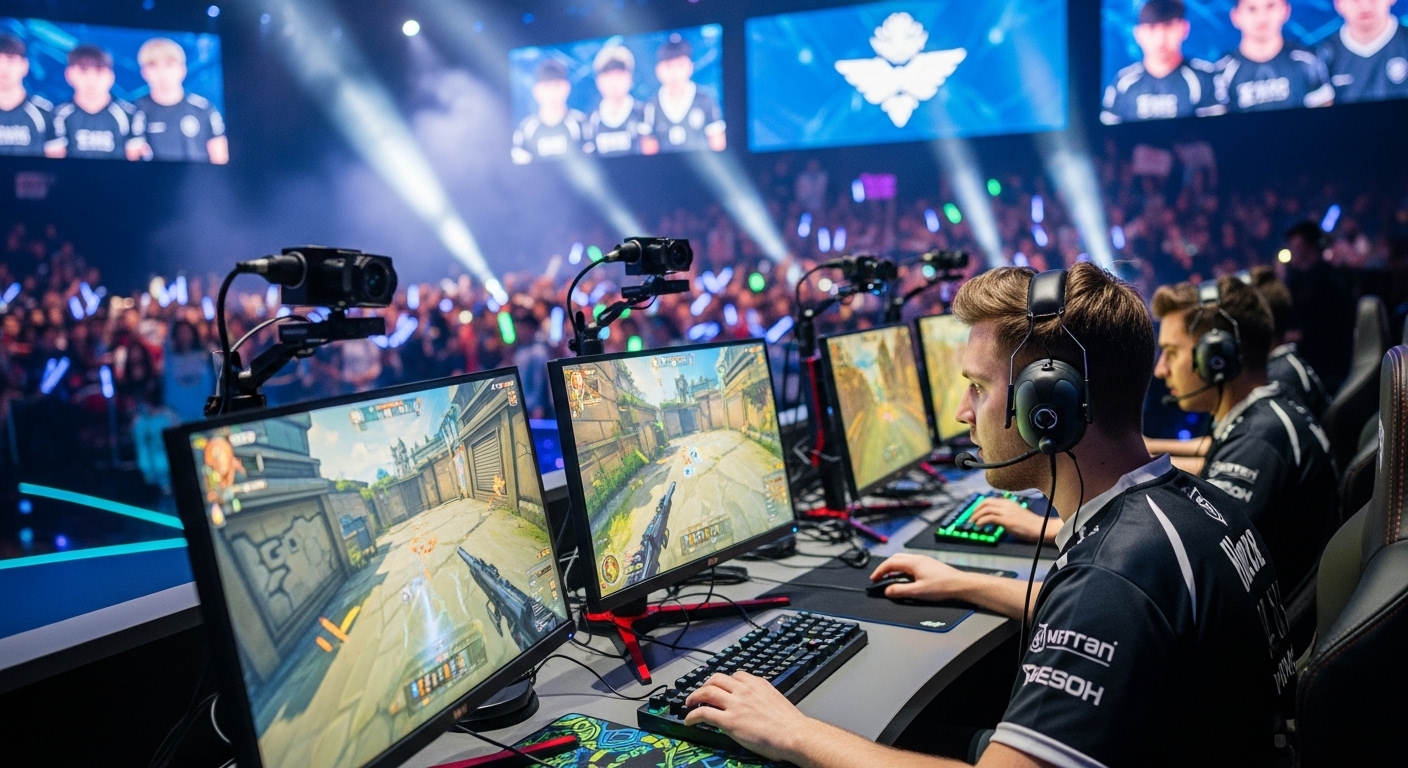
Esports represents the merging of technology, skill, entertainment, and community. Players compete in organized tournaments, often broadcast live to vast audiences both online and offline. From small local events to massive international championships filling entire stadiums, Esports has revolutionized how people perceive gaming and competition in the digital era.
The Origins of Esports
The roots of Esports can be traced back to the early days of arcade and console gaming in the 1970s and 1980s. The first known video game competition took place at Stanford University in 1972, where players competed in the game Spacewar. The prize was modest, but the event marked the beginning of something much greater. In the 1980s, with the popularity of arcade machines and early consoles like the Atari and Nintendo Entertainment System, competitive gaming slowly began to take shape.
The 1990s marked a turning point. The rise of personal computers and local area networks (LANs) allowed players to compete directly against each other. Titles like Quake, StarCraft, and Counter-Strike became the foundation for competitive gaming. Online connectivity further expanded opportunities, making global competitions possible without physical proximity. These formative years laid the groundwork for the professional leagues, sponsorships, and massive tournaments that would come later.
The Growth of Esports in the 2000s
The early 2000s saw Esports evolve from a small community activity to an organized professional ecosystem. Internet cafes, online forums, and streaming platforms helped connect gamers from around the world. South Korea emerged as the leading force in Esports during this period. The country’s investment in broadband internet and gaming infrastructure led to the creation of professional gaming teams, televised matches, and gaming celebrities.
Games like StarCraft became national obsessions, and professional players were treated like sports stars. South Korea’s success inspired other countries to follow suit, creating regional leagues and competitions. In the West, tournaments such as the World Cyber Games and Major League Gaming brought structure and legitimacy to Esports.
This decade also saw the rise of popular competitive titles that remain relevant today. Counter-Strike, Dota, Warcraft III, and Halo dominated early tournaments, while the introduction of streaming platforms later changed how audiences consumed Esports content.
The Role of Streaming and Online Platforms
The explosion of streaming technology fundamentally changed Esports. The emergence of platforms like Twitch and YouTube Gaming allowed fans to watch live matches, follow their favorite players, and engage with gaming communities in real time. This accessibility helped Esports reach a global audience, breaking down barriers of geography and language.
Streaming also created new opportunities for aspiring players. Talented individuals could showcase their skills online, build fan bases, and attract sponsorships without needing formal representation. Professional teams began scouting talent through online leaderboards and streams, turning unknown players into international superstars.
The social aspect of streaming also contributed to the rise of Esports culture. Fans no longer had to attend events physically to enjoy the excitement. They could cheer, chat, and interact with the community from anywhere. This direct connection between players and fans helped establish Esports as not only a competition but also a lifestyle and entertainment movement.
Major Esports Titles That Shaped the Industry
Over the years, several iconic games have become synonymous with Esports. Each title contributed uniquely to the industry’s growth and has cultivated a dedicated competitive scene.
League of Legends (LoL): One of the most popular and influential Esports titles, League of Legends established a massive professional circuit known as the League of Legends Championship Series (LCS). The annual World Championship draws millions of viewers worldwide, with production quality and fan engagement rivaling major sports events.
Counter-Strike: Global Offensive (CS:GO): Known for its fast-paced, team-based gameplay, CS:GO remains a cornerstone of Esports. The tactical depth, skill requirement, and long-standing community have kept it relevant for over a decade.
Dota 2: Valve’s Dota 2 is renowned for its annual tournament, The International, which consistently offers one of the largest prize pools in Esports history. The game’s complexity and strategic depth attract both players and fans who appreciate high-level competition.
Fortnite: While newer to the Esports scene, Fortnite’s influence cannot be ignored. Its massive player base, unique gameplay style, and crossover events with popular culture have drawn younger audiences into competitive gaming.
Call of Duty, Overwatch, and Valorant: These games represent the diversity of Esports genres, from first-person shooters to team-based tactical competitions. Each has developed its own ecosystem of tournaments, professional teams, and fan communities.
The Esports Economy and Professionalization
Today, Esports is not just about playing games—it’s a full-fledged business. The industry generates billions of dollars annually through sponsorships, advertising, media rights, merchandise, and ticket sales. Major corporations, including technology companies, beverage brands, and automobile manufacturers, have invested heavily in Esports partnerships.
Professional players now enjoy salaries, endorsement deals, and prize money comparable to traditional athletes. Top-tier teams are run like professional sports organizations, complete with managers, coaches, psychologists, and training facilities. Esports academies have emerged to train young talent, while universities offer scholarships and degrees related to Esports management and game studies.
The commercialization of Esports has also led to the creation of leagues modeled after traditional sports. Franchised systems like the Overwatch League and Call of Duty League provide stability and structure to teams and investors. This level of organization ensures long-term sustainability and continuous audience engagement.
Esports and Traditional Sports: A Comparison
The debate between Esports and traditional sports is ongoing, but the similarities are striking. Both require strategy, teamwork, discipline, and immense dedication. Esports players train rigorously, often practicing for 8 to 12 hours daily to refine their reflexes, communication, and tactical awareness.
Just like athletes, professional gamers face mental and physical challenges. Maintaining focus, dealing with pressure, and preventing burnout are critical aspects of success. Sports science has even started to influence Esports, with teams employing nutritionists and psychologists to optimize player performance.
Furthermore, Esports events mimic traditional sports in presentation and fan experience. Massive arenas, cheering crowds, live commentators, and post-match interviews all contribute to the spectacle. As a result, the gap between traditional and digital sports continues to shrink.
The Cultural Impact of Esports
Esports has done more than create careers and industries—it has changed global culture. It has become a symbol of modern youth identity, creativity, and technological progress. Gaming communities foster inclusivity and collaboration, bringing together people from different backgrounds, languages, and regions.
The influence of Esports extends to fashion, music, and entertainment. Collaborations between game developers and artists produce unique experiences that blend virtual and real-world cultures. Celebrity endorsements and Esports appearances on mainstream media platforms have further legitimized gaming as a respected form of entertainment.
Moreover, Esports has become a global social connector. During the pandemic, when traditional sports and entertainment were on hold, Esports thrived. Virtual competitions provided an outlet for both players and fans, proving the resilience and adaptability of digital entertainment.
Education and Esports
The academic world has also embraced Esports. Universities and colleges around the globe now offer Esports scholarships, courses, and degrees focused on game development, marketing, event management, and broadcasting. These programs recognize Esports as a multidisciplinary field that combines technology, communication, business, and design.
Schools use Esports as a tool to engage students, promote teamwork, and introduce them to potential careers in the digital industry. High schools have started forming Esports clubs and competitive teams, fostering skills in leadership, problem-solving, and digital literacy.
The inclusion of Esports in educational systems highlights its legitimacy as both a profession and a cultural force. It also provides pathways for students who may not fit into traditional athletic programs but excel in virtual competitions.
Challenges Facing the Esports Industry
Despite its rapid growth, Esports faces several challenges that must be addressed for sustainable development. One major issue is player health. Long hours of screen time, repetitive motion, and mental stress can lead to burnout or physical strain. Organizations must prioritize player well-being to ensure longevity in professional careers.
Another concern is the lack of consistent global regulation. Unlike traditional sports with governing bodies, Esports operates under different rules depending on the game and region. This can create issues with fairness, integrity, and standardization.
Cheating and match-fixing are additional risks that threaten Esports credibility. Developers and tournament organizers continually work to enhance anti-cheat systems and enforce strict disciplinary actions.
Furthermore, gender disparity remains a topic of discussion. While Esports is open to all, women and marginalized groups still face barriers such as discrimination and lack of representation. Efforts are being made to promote diversity and create inclusive spaces within the community.
The Future of Esports
Looking ahead, the future of Esports appears brighter than ever. Advancements in technology such as virtual reality, augmented reality, and artificial intelligence promise to revolutionize how games are played and experienced. Esports could soon expand beyond screens into immersive, interactive worlds that blur the lines between physical and digital competition.
The inclusion of Esports in global events such as the Asian Games and discussions about its potential inclusion in the Olympic Games demonstrate its growing acceptance on the world stage. Governments and institutions are recognizing Esports as an official sport, further integrating it into mainstream culture.
Additionally, mobile Esports is gaining traction, especially in regions like Southeast Asia and South America, where mobile gaming is more accessible than PC setups. Games like PUBG Mobile and Mobile Legends have created massive Esports communities that continue to grow rapidly.
With continuous innovation, the Esports ecosystem is set to become even more diverse, inclusive, and technologically advanced. The next decade will likely see Esports solidify its place as a central pillar of global entertainment.
Conclusion
Esports is no longer just about playing video games—it is about competition, community, and creativity. From humble beginnings in arcades to massive international tournaments watched by millions, Esports has evolved into a powerful global industry. It combines the excitement of sports with the innovation of technology, shaping the future of entertainment and redefining what it means to be an athlete in the digital age.
As Esports continues to expand, it offers endless opportunities for players, fans, educators, and businesses. It stands as a testament to human adaptability and passion, proving that skill, strategy, and teamwork can thrive in both physical and virtual arenas. The journey of Esports is far from over; it is just beginning a new chapter in the story of global culture and competitive spirit.