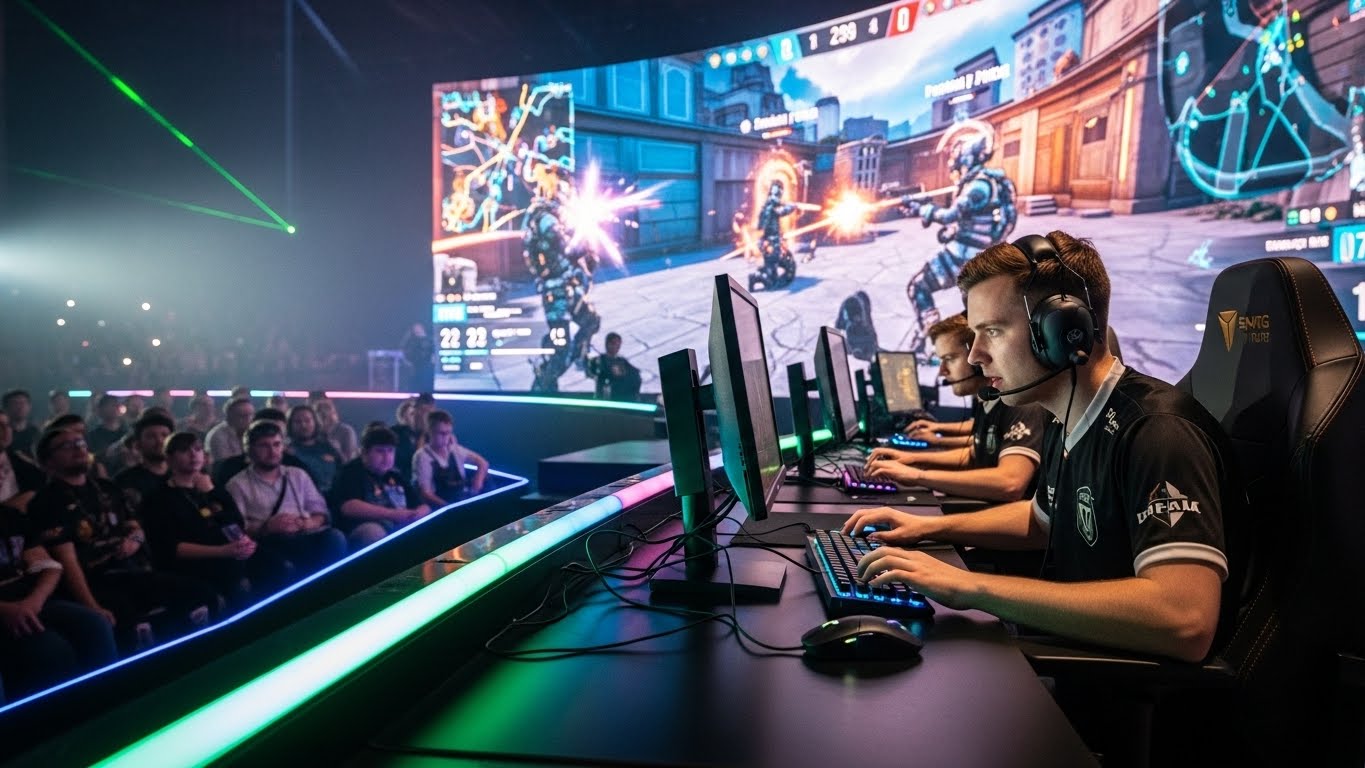
Esports has evolved from being a niche activity among dedicated gamers to a global phenomenon that attracts millions of viewers, players, and investors. Once considered a hobby, competitive gaming now stands as a mainstream industry with professional players, massive prize pools, and high-profile sponsors. But how did esports transform from a small subculture into one of the fastest-growing entertainment sectors in the world? In this blog post, we’ll explore the journey of esports, the forces driving its growth, and what the future holds for this rapidly expanding industry.
The Origins of Esports: From Arcade Competitions to Global Leagues
The history of esports can be traced back to the early days of video gaming, when gamers would compete against one another in local competitions. In the 1970s and 1980s, arcade games like Space Invaders and Pong introduced the idea of competition in a digital space. These games were relatively simple in design, but they laid the groundwork for competitive gaming. Players often found themselves in competition for high scores, leading to early forms of tournament-style play.
However, esports as we know it today began to take shape in the late ’90s, with the release of more complex and strategic games. Titles such as Quake (1996) and StarCraft (1998) were designed with competitive multiplayer modes, offering gamers the opportunity to test their skills against one another in a more structured environment. In 1997, the first Quake tournament, known as Red Annihilation, was held, marking one of the earliest examples of a major esports competition. This event set a precedent for the organized esports tournaments we see today.
The following years saw the establishment of key organizations, such as the World Cyber Games (WCG), which held its inaugural event in 2000. This was the first attempt at creating a global esports competition, with players from various countries coming together to compete in games like Warcraft III and StarCraft. With tournaments such as the WCG and the Cyberathlete Professional League (CPL), esports began its transition from a small hobbyist activity to an organized, professional sport.
The Role of Streaming: Connecting Players and Audiences
While competitive gaming had been around for years, it wasn’t until the rise of streaming platforms in the 2010s that esports truly took off. Websites like Twitch, which launched in 2011, revolutionized the way gamers and fans interacted with each other. Twitch allowed players to stream their gameplay live, while also providing viewers the ability to interact through live chat. This direct connection between players and fans created a new, dynamic relationship that was previously unseen in traditional sports.
As esports tournaments began to be streamed live on platforms like Twitch and YouTube, the viewership for these events exploded. Major esports competitions, such as The International (the annual Dota 2 championship) and the League of Legends World Championship, began attracting millions of viewers worldwide. In fact, the viewership for some esports events now rivals that of traditional sports like the Super Bowl or the FIFA World Cup.
The interaction between players and fans also became a significant aspect of the esports experience. Fans could watch their favorite players live, send donations, and even influence gameplay through in-game interactions. This fan engagement helped to create an esports ecosystem that was built on both entertainment and community.
The Financial Growth of Esports: Sponsorships and Investments
As esports grew in popularity, so did its financial potential. What was once a small niche industry began to attract large corporations and brands, looking to tap into the growing gaming audience. Sponsorships became a crucial part of the esports ecosystem, with companies like Intel, Coca-Cola, Red Bull, and Nike investing heavily in esports teams, events, and players. These brands recognized the enormous reach that esports had among young, tech-savvy audiences, and their investments have played a critical role in the industry’s rapid expansion.
One of the most significant developments in the financial growth of esports has been the creation of massive prize pools. For example, The International has seen its prize pool grow year after year, with 2021’s total prize pool reaching a staggering $40 million. The size of these prize pools not only attracts top players from around the world but also makes esports a viable career for many individuals.
Moreover, the influx of corporate sponsorships has allowed esports organizations to hire coaches, analysts, and managers, making esports more professional and competitive. Esports players themselves now enjoy salaries comparable to those of professional athletes, with many making six-figure incomes through sponsorship deals, tournament winnings, and streaming revenues.
The Rise of Professional Esports Leagues
One of the defining features of esports’ growth has been the establishment of professional leagues. Much like the NBA, NFL, or Premier League, these leagues provide a structured format for competition and allow for a consistent season of play. Some of the most popular and successful esports leagues include the League of Legends Championship Series (LCS), Overwatch League (OWL), and Call of Duty League (CDL).
The LCS, for instance, was founded in 2013 by Riot Games, and it has grown into one of the most prominent esports leagues in the world. The league hosts regular seasons, playoffs, and a grand championship, all with significant prize pools and sponsorships. The LCS has also played a role in expanding esports globally, with regional leagues in Europe, China, and South Korea, creating a truly international competitive scene.
The Overwatch League, launched in 2018, introduced the concept of city-based teams, modeled after traditional sports franchises. Teams like the Los Angeles Gladiators and Shanghai Dragons compete in a regular season with playoffs at the end of the year. The OWL’s unique franchise model, along with its focus on building fan bases around specific cities, has helped elevate esports to new heights.
These professional leagues have not only enhanced the credibility of esports but also created a sustainable business model. Teams are now able to generate income from a variety of sources, including merchandise sales, streaming rights, and ticket sales to live events. Additionally, professional leagues provide a clear career path for players, making it a legitimate option for those looking to make a living in the gaming industry.
Esports in Education and Career Development
In recent years, esports has also begun to intersect with education. Many high schools and universities around the world have started to embrace esports as part of their extracurricular activities or even as part of their academic programs. Some schools now offer scholarships for esports players, and several universities have established dedicated esports programs that teach everything from game strategy and team management to game design and esports marketing.
This new focus on esports in education is a reflection of its growing importance in global culture. Students now have the opportunity to pursue careers in esports as players, coaches, broadcasters, or analysts. This trend is only likely to grow, with universities offering degrees in fields like esports management, game design, and even esports journalism.
Furthermore, esports promotes valuable life skills such as teamwork, communication, critical thinking, and problem-solving. Players must work together, analyze their opponents, and develop strategies on the fly, all of which are transferable to careers in other fields.
The Cultural Impact of Esports
Beyond the business side, esports has had a significant cultural impact. Competitive gaming has helped to foster a sense of community and belonging for millions of people around the world. Esports events are not just about watching games—they are about being part of a larger movement. Fans come together to support their favorite teams, share in victories, and experience the highs and lows of competition.
Esports also challenges the traditional notions of sports fandom. While traditional sports often involve physical performance, esports is a showcase for mental acuity, strategy, and teamwork. This has led to a broader definition of what constitutes “athleticism,” with esports players being recognized for their exceptional reflexes, decision-making skills, and ability to stay calm under pressure.
Moreover, esports has helped to make gaming more inclusive. Historically, gaming was seen as a male-dominated hobby, but today, esports features a growing number of female players, streamers, and content creators. Diversity and inclusivity are central to the esports community, and efforts are being made to ensure that everyone, regardless of gender, race, or background, has the opportunity to participate and succeed.
The Future of Esports: What Lies Ahead?
Looking ahead, the future of esports seems incredibly promising. The industry is continuing to expand, both in terms of viewership and revenue. With advancements in technology, particularly in virtual reality (VR) and augmented reality (AR), esports could become even more immersive, providing new and exciting ways for fans to experience games and tournaments.
Another area for growth is in global markets, particularly in regions such as Latin America, Southeast Asia, and the Middle East. As infrastructure in these areas improves, more and more players and fans are expected to join the global esports community, further boosting the industry’s reach.
Finally, there is the possibility of esports becoming a part of the Olympic Games. While esports has yet to be included in the official Olympic program, there have been discussions about its potential inclusion, particularly given the growing interest in esports around the world. If esports were to join the Olympics, it would undoubtedly elevate the industry to new levels of recognition and prestige.
Conclusion
Esports has come a long way from its humble beginnings as a casual gaming activity. Today, it stands as a multi-billion-dollar industry with professional leagues, global tournaments, and millions of fans. The rise of streaming, corporate sponsorships, and educational programs has helped shape esports into the cultural and economic force it is today. With continued growth and innovation on the horizon, esports is set to be a defining element of entertainment in the 21st century. As the industry continues to evolve, one thing is clear: esports is here to stay.