Over the last decade, esports has evolved from a niche activity into a global phenomenon that commands millions of fans and generates billions in revenue. What began as small local tournaments among enthusiasts has now become a multi-billion-dollar industry with professional players, worldwide tournaments, and an ever-expanding audience. Esports is no longer just about playing video games; it is a powerful cultural force reshaping the landscape of competitive entertainment. In this blog post, we will explore the rise of esports, its cultural impact, its financial growth, and what the future holds for competitive gaming.
The Origins of Esports: From Basement Tournaments to Global Events
The history of esports can be traced back to the early days of video games. While competitive gaming has existed since the 1970s, it wasn’t until the 1990s that the foundation for modern esports was laid. The first notable esports tournament, the Intergalactic Spacewar Olympics, was held in 1972 at Stanford University. Though small and limited in scope, this event was a precursor to what would later become an entire industry.
The 1990s saw the emergence of competitive multiplayer games, particularly with the advent of internet gaming. Titles like Quake and StarCraft introduced the concept of online competitions, and players could now compete against others from around the world, not just from their local arcade or community. The formation of organizations like the Cyberathlete Professional League (CPL) in 1997 and World Cyber Games (WCG) in 2000 marked the beginning of more structured competitive gaming.
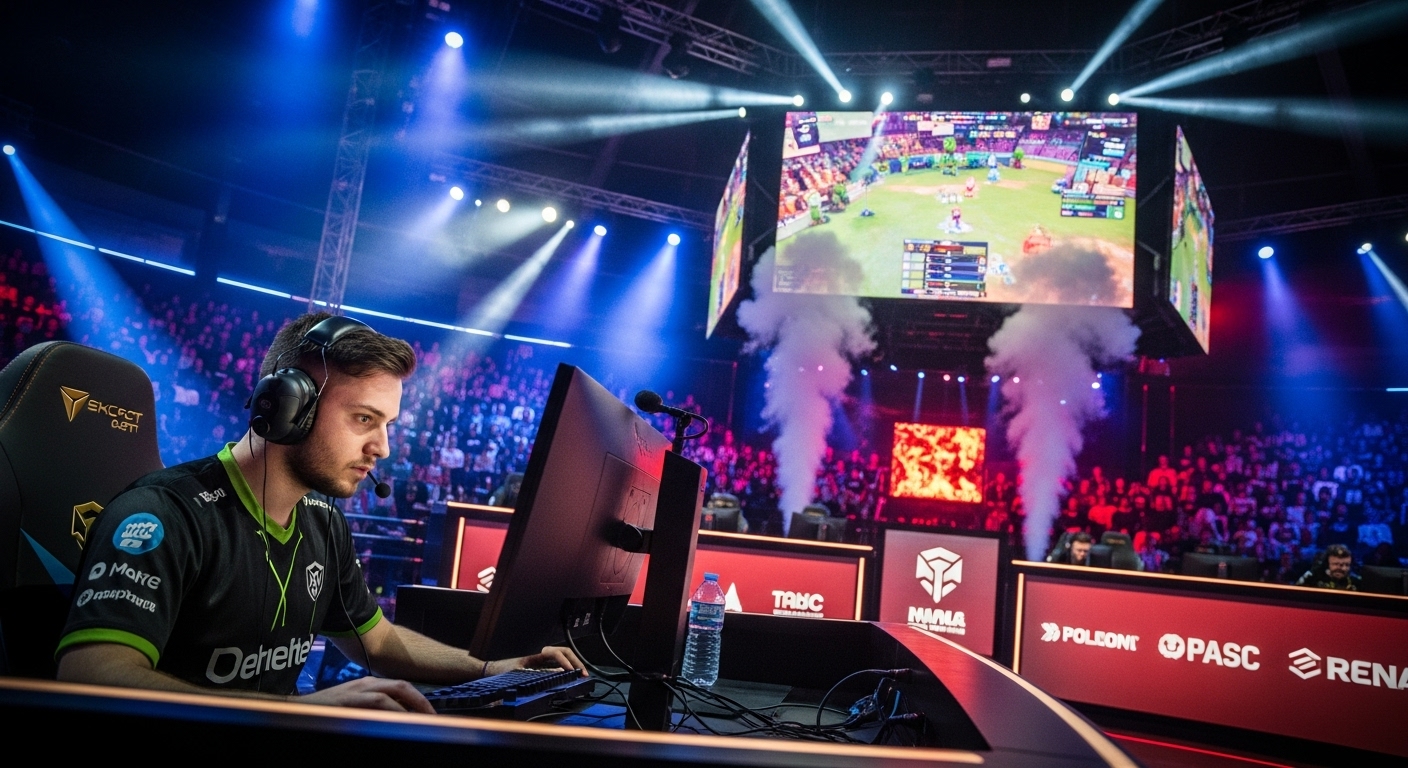
It was the early 2000s that truly set the stage for esports to blossom. Professional tournaments began offering cash prizes, and players started to be seen as serious competitors rather than just enthusiasts. These tournaments were held in arenas and broadcast to audiences around the world, allowing the seeds of esports to take root in the public consciousness.
Esports: The Modern Boom
Fast forward to the 2010s, and esports began to experience rapid growth. This era saw the rise of some of the most popular and competitive games in the world, including League of Legends, Dota 2, Counter-Strike: Global Offensive (CS:GO), and Overwatch. These games, with their complex gameplay mechanics, large-scale tournaments, and ever-growing player bases, became the foundation for a flourishing esports ecosystem.
The launch of The International in 2011, a premier Dota 2 tournament, marked a turning point in the industry. The first International offered a $1 million prize pool, an unheard-of sum at the time. As crowdfunding began to play a role in raising the prize pool, the 2018 International reached over $25 million, showcasing the massive growth potential for esports. Events like The International proved that esports could draw huge viewership and generate significant revenue, prompting major organizations and sponsors to take notice.
Similarly, League of Legends, developed by Riot Games, became one of the most-watched games in the world, with the League of Legends World Championship routinely attracting millions of viewers. With a global professional league structure and franchised teams, Riot Games set the bar for how esports could be organized on a large scale, with tournaments held in arenas like the Staples Center in Los Angeles and the Bird’s Nest in Beijing.
The expansion of esports into mainstream entertainment was further fueled by the rise of streaming platforms like Twitch and YouTube Gaming. These platforms allowed fans to watch live streams of professional tournaments and interact with their favorite players. Twitch, in particular, became a hub for esports broadcasts, attracting millions of viewers and turning personalities like Ninja and Shroud into household names.
Esports as a Career: Beyond Playing the Game
While competitive gamers remain the most visible part of esports, the industry has opened up numerous career paths. Players are not the only professionals benefiting from esports; behind every tournament, team, and broadcast is an entire ecosystem of jobs.
Coaching and Team Management: Just like in traditional sports, esports teams require managers, coaches, and analysts. Coaches help players refine their strategies, improve their teamwork, and elevate their individual performances. Analysts provide in-depth breakdowns of gameplay and strategies, while team managers handle logistics, sponsorships, and contracts. These positions have become integral to the success of esports organizations.
Content Creation and Streaming: Many professional players and former pros have transitioned into content creation, live streaming, and YouTube production. Platforms like Twitch, YouTube, and Facebook Gaming allow esports professionals to engage directly with their fans, create educational content, and entertain audiences through gameplay. Some of the biggest names in esports, like Ninja, Pokimane, and Dr Disrespect, have made lucrative careers outside of competitive play through their streams and content.
Casting and Commentating: Esports has its own version of sports commentators, known as casters, who provide live commentary and analysis during events. These casters bring excitement to matches by narrating the gameplay, offering insights, and creating a dynamic atmosphere. Similar to traditional sports commentators, esports casters are vital in making esports broadcasts enjoyable for fans.
Event Production and Broadcasting: Behind the scenes, esports events require a large production team to ensure smooth execution. From camera operators and technical directors to producers and sound engineers, these professionals ensure that the events are broadcast at the highest quality. The increase in the production value of esports events has helped elevate the experience for viewers, with high-definition broadcasts, advanced graphics, and live updates becoming standard.
Marketing and Sponsorships: As esports continues to grow, so does its commercial potential. Sponsorship deals from major brands like Coca-Cola, Red Bull, Intel, and Nike are fueling the industry, allowing teams and events to thrive. Marketers also play a critical role in creating strategies that attract and engage fans, increase brand exposure, and ensure the growth of esports organizations. These partnerships often extend to teams, players, and even streamers who benefit from financial support and exposure.
The Global Appeal of Esports
One of the most remarkable aspects of esports is its ability to unite players and fans from all over the world. Unlike traditional sports, which are often limited by geography, language, and culture, esports transcends borders. A Dota 2 player in the United States can compete against someone in Korea, and fans from Europe, Latin America, and Asia can watch and support the same tournament. Esports is truly a global experience, with communities forming across different languages, regions, and cultures.
This global reach has been one of the key drivers of esports’ success. Major tournaments such as The International and the League of Legends World Championship attract fans from every corner of the world. With live streaming platforms broadcasting in multiple languages, esports has become one of the most accessible forms of entertainment.
Esports also fosters a sense of community among fans. Online forums, social media platforms, and fan groups provide spaces for individuals to connect, share experiences, and build relationships. The fan-driven nature of esports has helped create an ecosystem where fans are not just spectators but active participants in the culture.
Esports and the Future: What Lies Ahead
As esports continues to grow, several exciting trends and developments are shaping the future of competitive gaming. One of the most prominent trends is the increasing involvement of traditional sports organizations. Leagues like the NBA, NFL, and even the English Premier League have begun to invest in esports, either through sponsorships or by owning esports teams. These organizations recognize the potential of esports to engage younger audiences and are leveraging their existing fanbases to bring esports to a wider demographic.
Another trend is the growth of college esports programs. Many universities have started offering scholarships and forming esports teams, providing a pathway for young gamers to pursue their passion professionally while obtaining an education. As the infrastructure for college esports grows, it is likely that we will see more collegiate competitions and partnerships with professional organizations.
The integration of new technologies such as virtual reality (VR) and augmented reality (AR) could also revolutionize esports. Imagine watching a Fortnite tournament in VR, where viewers could experience the event from the players’ perspective or even engage in real-time gameplay. These technologies could take the spectator experience to a whole new level, making esports even more immersive and interactive.
Finally, the continued growth of mobile esports is another exciting development. Games like PUBG Mobile, Mobile Legends, and Clash Royale have proven that esports is not limited to PCs and consoles. With the increasing power and accessibility of smartphones, mobile esports tournaments are becoming more common, attracting millions of players and viewers from countries where mobile gaming is dominant.
Conclusion
Esports has come a long way from its humble beginnings in basement tournaments to becoming a global entertainment juggernaut. As the industry continues to expand, it has reshaped the way people think about competitive gaming, offering new career paths, creating global communities, and driving the future of digital entertainment. The rise of esports has also given rise to an entirely new culture, where millions of fans engage with their favorite players, teams, and events in ways that were previously unimaginable.
Looking ahead, the potential for esports is limitless. With advances in technology, increased investment, and an ever-growing fanbase, esports is on track to become one of the most important forms of entertainment in the 21st century. Whether you’re a player, a fan, or a casual viewer, there has never been a more exciting time to be a part of the esports revolution.